Millions of people are now on GLP-1 medications like Ozempic and Wegovy. They are losing weight, managing blood sugar, and in many cases changing their lives.
But there is one side effect that almost nobody talks about and your pharmacist almost certainly did not mention it.
It is happening in your mouth.
What GLP-1 Medications Do to Your Teeth
Your Mouth Gets Dry. Really Dry.
GLP-1 drugs reduce saliva production. That might not sound like a big deal, but saliva is your mouth’s first line of defense against bacteria.
When saliva decreases, bacteria multiply faster. Plaque builds up more quickly. And cavities that would normally take years to develop can form in a matter of months.
Dry mouth is one of the most common — and most underreported — side effects of Ozempic and similar medications.
Nausea Brings Acid. Acid Attacks Enamel.
Many patients experience nausea, especially in the first weeks of GLP-1 treatment. When stomach acid reaches your teeth repeatedly — even in small amounts — it softens enamel.
Enamel does not grow back.
Over time, this shows up as increased sensitivity, visible wear on the edges of teeth, and a higher risk of cavities even in patients who have never had problems before.We are at 439 60th St Ste 1 in West New York NJ. We will help you figure out the next step.
Gum Disease Can Accelerate Quietly
With less protective saliva and more bacterial activity, your gums become more vulnerable too.
The challenge with gum disease is that it has no pain in its early stages. By the time it becomes noticeable, it usually requires more involved treatment to reverse. Many patients on Ozempic who are not seeing their dentist regularly are unknowingly letting gum disease progress.
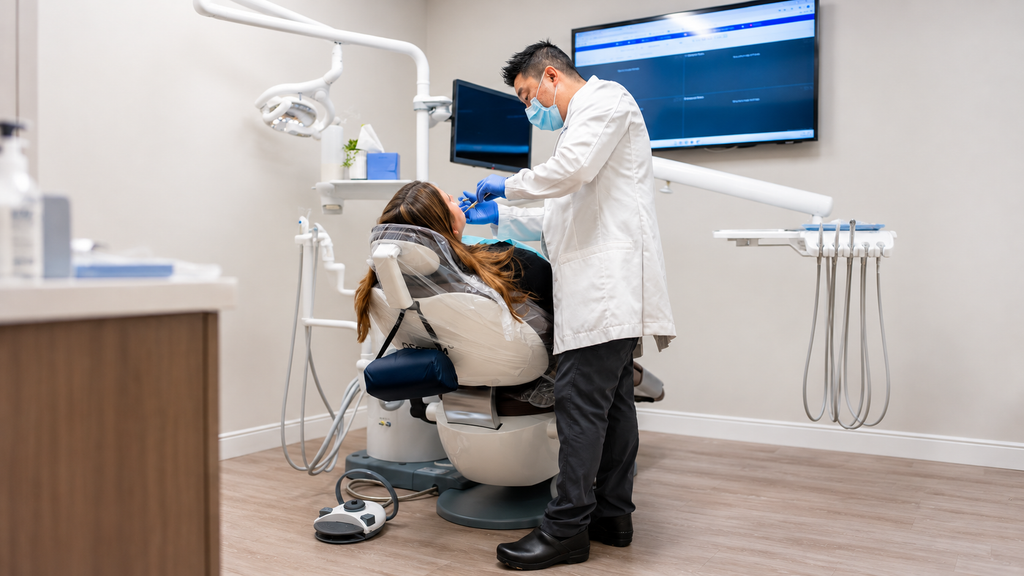
The Good News: This Is Very Manageable
None of this means you should stop taking your medication. That is a conversation for your doctor.
What it means is that your dentist needs to know you are on a GLP-1 medication.
When we know, we can adjust your care plan. That usually looks like:
- More frequent cleanings to stay ahead of bacterial buildup
- Fluoride treatments to protect softened enamel
- Dry mouth rinse recommendations to help replace what the medication reduces
- Closer monitoring of gum health between visits
None of this is complicated. It just needs to be on your chart.
What to Do Right Now
If you are currently taking Ozempic, Wegovy, Mounjaro, or any GLP-1 medication, here are three simple steps:
1. Tell your dentist at your next visit. Mention the medication by name and when you started. This changes how we monitor and care for your teeth.
2. Book a visit if you have not been in recently. The longer you wait, the more time bacteria have to work without the protection your saliva used to provide.
3. Do not wait for symptoms. Dry mouth, enamel erosion, and early gum disease often have no pain. Waiting until something hurts means waiting until the problem is bigger.
We See This More and More at Our Office
At Complete Dental Works in Teaneck and West New York, NJ, we are seeing more patients on GLP-1 medications than ever before. And the ones who tell us early are the ones who stay ahead of it.
If you are on Ozempic or a similar medication and have not been in recently, we would love to take a look and update your care plan. Book your visit online or call us at (551) 369-0047.