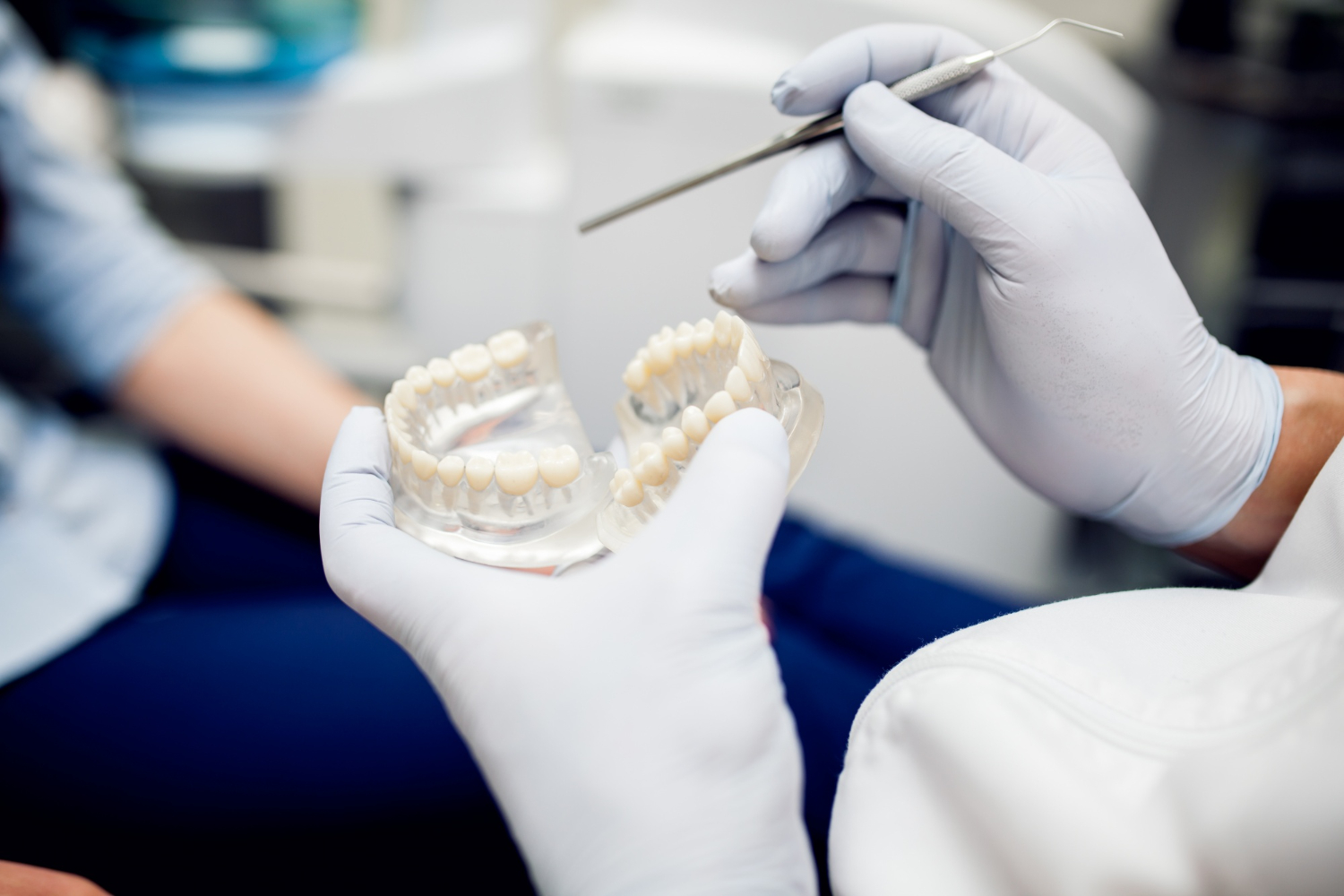

The biggest fear isn’t the treatment — it’s regretting it afterward
In recent years, interest in smile makeover treatments and dental veneers has grown significantly. However, alongside that trend came a very specific concern: ending up with excessively shaved teeth, artificial-looking results, or a smile that no longer feels authentic.
Social media has viralized extreme cases commonly referred to as “shark teeth,” where the natural tooth structure is aggressively reduced before placing veneers or crowns. For many people, those images have become a frequent reference point when thinking about invasive and overly aggressive cosmetic dentistry.
And the concern is completely valid.
Nobody wants to invest in their smile only to end up with constant sensitivity, unnecessary tooth reduction, or an exaggerated result that completely changes their facial features. Especially for adult patients, the goal is rarely to “look different.” What they truly want is to look better without losing naturalness or facial expression.
A natural smile doesn’t begin by shaving down teeth — it begins with proper planning
One of the most common mistakes in cosmetic dentistry happens when treatment starts without precise facial and functional planning. When there is no clear design established beforehand, certain procedures end up depending on unnecessary tooth reduction to create space or correct issues that could have been evaluated during the planning phase.
Today, the most advanced approach is not about working more aggressively. It’s about working with greater precision and planning.
What does “minimal tooth reduction” actually mean?
Minimal tooth reduction is a conservative philosophy focused on preserving as much natural enamel as possible. Depending on the patient’s anatomy and needs, reduction may be limited to an extremely thin superficial layer, sometimes close to 0.3 millimeters.
This approach aims to better preserve the natural tooth structure, reduce post-treatment sensitivity, and minimize unnecessarily invasive procedures.
But achieving that result is not simply about “doing less.” It’s about designing better from the beginning.
When treatment is digitally planned before it starts, it becomes possible to analyze facial proportions, bite dynamics, lip movement, and overall harmony to evaluate what may benefit each case both functionally and aesthetically.
The goal isn’t to have perfect teeth. It’s for your smile to still feel like yours.
One of the most common problems in cosmetic dentistry occurs when the focus is placed only on tooth color or size, completely ignoring how the smile integrates with the patient’s face.
Smiles that are often perceived as artificial tend to share a similar pattern: they were designed without properly considering the person’s facial identity.
A well-planned smile takes into account elements such as facial structure, age, personality, speech patterns, natural lip movement, and the unique way each person smiles.
At Complete Dental Works, every treatment is developed with an approach focused on creating aesthetic solutions aligned with each patient’s individual characteristics, goals, and functional needs.
Resin veneers vs. ceramic veneers: why not all options age the same way
When researching dental veneers, much of the information available tends to focus only on price. However, very few people truly understand how materials influence the long-term aesthetic stability and durability of treatment.
Resin veneers may work well in certain specific cases, although they tend to stain, wear down, and lose shine more quickly over time. Ceramic veneers, on the other hand, are often considered a more stable and durable long-term alternative.
In addition to better mimicking the natural translucency of enamel, ceramic allows for greater precision in texture, shape, and light reflection. The result may appear more natural, refined, and harmonious with the face.
For this reason, patients who have had disappointing cosmetic experiences in the past often seek more advanced and longer-lasting options that require fewer corrections over time.
True cosmetic dentistry should make you feel more like yourself, not less
For years, many people avoided cosmetic treatments because they feared no longer recognizing themselves in the mirror or feeling that their smile no longer matched their facial features. Today, cosmetic dentistry incorporates digital planning tools that allow facial harmony to be analyzed in far greater detail before treatment even begins.
When a smile is carefully planned, the design can be better adapted to the patient’s facial characteristics and natural expression.
The most harmonious results are usually the ones where the smile integrates naturally with the rest of the face, without drawing exaggerated attention.
That is the difference between a strategically designed smile and one that simply tries to look whiter or more dramatic.
A well-designed smile should never feel like a gamble
Modern cosmetic dentistry increasingly incorporates digital tools, mock-ups, and advanced planning processes that allow different aspects of treatment to be visualized and adjusted before making permanent changes to the natural teeth.
When someone decides to invest in their smile, having clear information, proper planning, and a realistic understanding of the process can help them make decisions with greater peace of mind and confidence.
And it all begins with understanding that the best veneers are not necessarily the biggest, the whitest, or the most noticeable — but the ones that adapt most naturally to each patient’s unique features and goals.